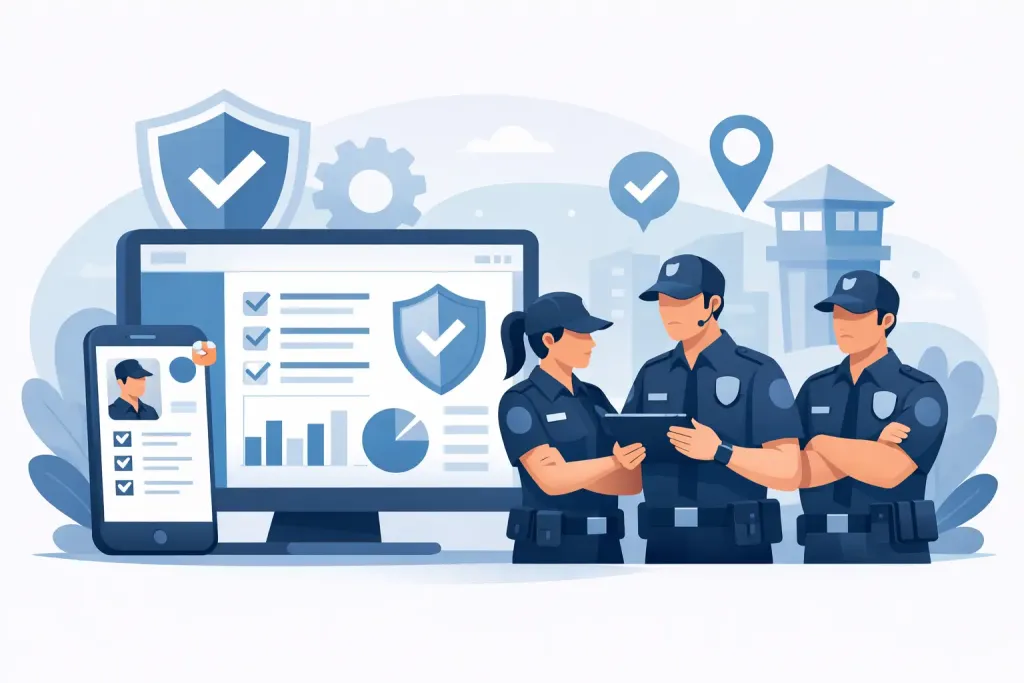
A missed patrol is not just a service failure. At a warehouse, office park or construction site, it can leave a gate unsecured, a hazard unreported or a client without the evidence they need after an incident. BS 7499 compliance software gives security managers a practical way to turn patrol activity, officer welfare checks and site records into live, defensible operational evidence.
The software is not a certificate of compliance by itself. BS 7499 requires capable people, suitable procedures and proper management. What the right system does provide is the control layer: a clear record of what was required, what happened, when it happened and how the business responded.
What BS 7499 means for security operations
BS 7499 is the British Standard code of practice for static site guarding. For security providers and in-house teams, it sets expectations around the organisation and delivery of guarding services, including assignment instructions, officer competence, supervision, welfare, communication and records.
The operational challenge is consistency. A contract may have detailed assignment instructions, scheduled patrols and incident escalation rules, but paper occurrence books and offline patrol readers make it difficult to prove that those controls were followed during every shift. Supervisors often discover gaps only after a client complaint, a missed checkpoint or a serious incident.
Digital systems help managers apply the standard in the real conditions of a working site. They do this by connecting officers in the field with a central record of activity, rather than relying on paperwork being completed correctly, retained securely and reviewed later.
Where BS 7499 compliance software adds control
Effective compliance software should reflect the actual guarding workflow, not force teams into generic forms that are ignored under pressure. It needs to make the required action easy for the officer and make exceptions visible to the manager.
Verifiable patrol evidence
A patrol route only provides assurance when the business can demonstrate that it was completed at the required place and time. Mobile guard tour technology can require officers to scan QR codes, NFC tags or other checkpoints at defined locations. GPS-based checkpoints can support patrols across large estates, car parks and remote perimeters where fixed tags are not practical.
Each completed scan creates a time-stamped record. Managers can see missed, delayed or out-of-sequence checkpoints as they occur, then intervene before a small service issue becomes a security exposure. This is particularly valuable where a contract includes response times or patrol frequencies that must be evidenced to the client.
Checkpoint data needs sensible configuration. Overly frequent scans can encourage officers to rush a route, while too few checks leave blind spots. The route should follow the assignment risk assessment and be reviewed when site layouts, access arrangements or threat levels change.
Current assignment instructions in the officer’s hand
Assignment instructions are only useful when officers can access the current version during a shift. A cloud-based platform can present site-specific duties, emergency contacts, keyholding procedures, restricted areas and escalation actions through the guard app.
This reduces the risk of an outdated printed folder being used after a client changes access rules or emergency arrangements. It also supports stronger shift handovers, because the incoming officer can see recent incidents, outstanding tasks and site notices before beginning patrols.
Digital access does not remove the need for officers to understand their instructions. Managers should still confirm comprehension during induction, site training and supervisory visits. The technology records distribution and activity; competent supervision confirms that the instruction is being applied correctly.
Incident reporting that supports immediate action
An incident report completed at the end of a shift is often too late to help operations. Security incidents can develop quickly, and a vague written note may not provide enough detail for a client, police enquiry, insurer or internal investigation.
A structured mobile incident form guides the officer to capture the essentials at the point of discovery: the location, time, category, description, photographs where appropriate, witnesses, actions taken and escalation details. Automated alerts can then notify the nominated manager or control room as soon as a high-priority report is submitted.
The benefit is not simply faster reporting. It is a consistent incident trail, linked to the officer, site and patrol record. That gives managers a clearer basis for follow-up actions, trend analysis and client reporting while reducing reliance on fragmented messages and handwritten notes.
Lone-worker safeguards and welfare evidence
Static guarding frequently involves lone workers, night shifts and isolated locations. BS 7499 compliance sits alongside wider health and safety responsibilities, so welfare arrangements need to be practical and demonstrable.
Scheduled check-ins, man-down alerts and panic alarms give officers defined ways to request help or confirm they are safe. If a check-in is missed, the system can alert the right person according to the site escalation procedure. Live location information may help responders locate an officer, but it must be used proportionately and managed in line with data protection obligations.
A lone-worker feature is only as effective as the response behind it. Managers need named responders, tested escalation paths and clear rules for what happens when an alert is raised. Technology can shorten the time to notification; it cannot replace a prepared human response.
Building an auditable compliance workflow
The strongest results come from configuring software around a defined operational process. Start by translating the contract, risk assessment and assignment instructions into specific patrol routes, tasks, forms and alert rules.
For example, a logistics site may require perimeter patrols at set intervals, a fire exit check before opening, a vehicle gate status report and immediate notification if a trailer seal appears damaged. Each activity can be configured as a recorded task rather than left as a broad instruction such as “complete routine checks”. Specific requirements produce specific evidence.
Next, set management ownership. Decide who monitors live exceptions, who reviews daily occurrence records, who closes corrective actions and who produces reports for the client. A dashboard has limited value if every missed patrol remains visible but unassigned.
Finally, establish a review rhythm. Site supervisors may need daily visibility of exceptions, while operations managers may review weekly trends across multiple sites. Monthly client reports should show service delivery, incidents, missed patrol reasons and corrective actions rather than presenting raw checkpoint data without context.
Choosing software for BS 7499 support
When assessing a system, focus on whether it gives your team reliable evidence and usable control during a live shift. Four capabilities are especially relevant:
- Multi-technology checkpoints, so patrol proof can match the realities of indoor, outdoor and remote areas.
- Real-time synchronisation and alerts, so missed activity and critical incidents are seen promptly rather than after data is uploaded.
- Configurable forms, tasks and occurrence records, allowing each assignment to reflect its own instructions and risk profile.
- Clear reporting and access controls, supporting client evidence, supervisory review and appropriate handling of personal data.
Scalability matters too. A single-site team may need straightforward patrol verification and incident reporting. A security company managing dozens of contracts needs separate site configurations, supervisor permissions, consistent reporting and a practical way to maintain standards across the estate.
QR-Patrol supports this model by combining smartphone-based patrol verification, live incident reporting, lone-worker protections and centralised reporting in one cloud platform. The objective is straightforward: give managers visibility while officers carry a practical tool that fits the shift.
Avoid treating the system as the whole compliance plan
Software can expose missed patrols, but it cannot solve understaffing. It can record an officer’s check-in, but it cannot establish whether induction, screening, training and supervision have been properly managed. Nor should a successful checkpoint scan be treated as proof that every observation on a patrol was made to the required standard.
Use the data to ask better management questions. Are certain patrols regularly late because the route is unrealistic? Are repeated incidents linked to a particular access point? Are lone-worker alerts being acknowledged within the expected time? These answers support corrective action and continuous improvement, which is far more valuable than collecting records solely for an audit.
When security threats do not wait, compliance evidence should not wait either. Build the patrol process around the risks that matter on site, give officers clear digital actions, and make sure a responsible manager can see and respond when the plan is not being followed.