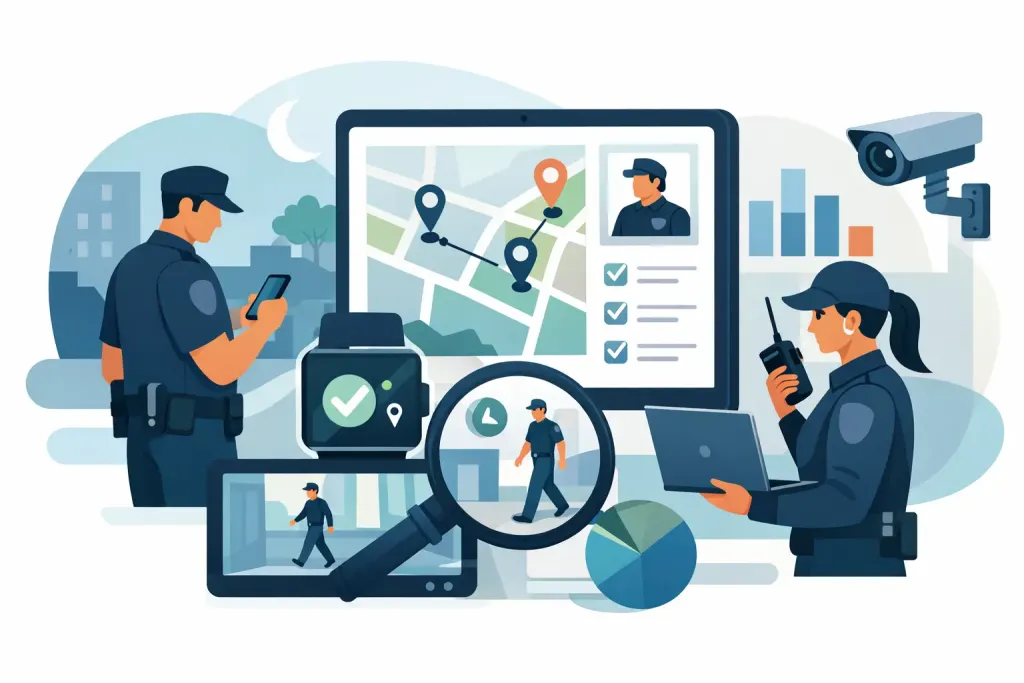
A patrol completed on paper is only as credible as the handwriting, the time it was entered and the person reading it later. When a client asks whether a vulnerable door was checked at 02:15, or an incident is reviewed after the fact, estimates are not enough. Patrol reporting tools create a live, verifiable record of what happened, where it happened and how the guard responded.
For security companies, facilities teams and in-house departments, that record is more than an administrative convenience. It is operational control. It gives supervisors the information to intervene during a shift, rather than discover a missed patrol in a weekly file.
What patrol reporting tools should do
At their most useful, patrol reporting tools connect the guard in the field with the people responsible for the site. A guard uses a mobile device to confirm checkpoint visits, complete assigned tasks, record observations and raise incidents. Managers see activity through a central system, with timestamps, location evidence and supporting notes or photographs where required.
The distinction matters. A basic digital form may improve legibility, but it does not necessarily prove a patrol took place at the correct location or alert a control room when activity stops. A proper patrol reporting system combines proof of presence, live communication and reporting into one workflow.
This is especially valuable across estates with multiple buildings, mobile teams or out-of-hours coverage. A supervisor cannot physically stand beside every guard. They need reliable evidence that each route, inspection and escalation has been completed to the required standard.
Proof of presence must be practical in the field
The strongest reporting process starts with a dependable checkpoint method. QR codes, NFC tags, Bluetooth beacons and GPS-based virtual checkpoints each have a place, depending on the environment.
QR and NFC checkpoints are well suited to fixed inspection points such as fire exits, plant rooms, gates and communal areas. They provide a clear action for the guard and a time-stamped record for management. Beacons can be useful where scanning a physical label is difficult, while GPS checkpoints support patrols across large external areas, construction sites and remote perimeters.
There is no single best technology for every site. GPS alone can be less precise around tall buildings or indoors. Physical tags provide location certainty but need sensible placement and periodic inspection. The right patrol reporting tools support more than one method, so the system can reflect the real conditions of each route rather than forcing every site into the same model.
Proof should also include context. If a guard finds a damaged fence panel, an effective report records the time, location, description, images and actions taken. That turns an isolated observation into a defensible operational record.
Build reports around decisions, not paperwork
A common mistake is to reproduce a paper occurrence book on a phone screen. Long free-text forms slow guards down, create inconsistent records and make reports difficult to compare. Digital reporting should make the right action easy at the point of need.
For routine checks, short task lists and mandatory response fields help ensure that critical details are not omitted. For incidents, configurable forms can capture the information needed for the specific risk: a forced entry, a welfare concern, a fire safety issue or a contractor breach will not require identical questions.
The balance is important. Overly rigid forms can discourage useful detail during a fast-moving event. Too little structure creates vague entries such as “all okay”, which offer little value during an audit or investigation. Good systems use structured prompts for essential facts and leave space for a clear narrative where professional judgement is needed.
Live visibility changes the supervisor’s role
Historical reports prove what happened. Live reporting helps managers change what happens next.
When a scheduled checkpoint is missed, a patrol runs late or a guard raises an alarm, the relevant supervisor should receive a prompt notification. They can contact the officer, dispatch support, notify the client or escalate to emergency services according to the site procedure. Minutes matter when the issue concerns a lone worker, an open access point or a potentially unsafe environment.
This visibility is not about monitoring guards for its own sake. It is about protecting people, maintaining service standards and reducing blind spots. A guard working alone in a warehouse, vacant property or remote compound needs a simple way to signal distress. Panic alarms, man-down alerts and welfare checks can make the reporting platform part of the site’s wider safety controls.
Managers should still apply judgement. A delayed scan may be a connectivity issue, a legitimate response to an incident or a route that was not realistically planned. The system identifies the exception; trained supervisors investigate the reason and take proportionate action.
Reporting for clients, compliance and internal improvement
Clients increasingly expect evidence, not assurances. A monthly report that simply states patrols were completed is weak compared with a record showing completed routes, exceptions, incidents, response times and recurring observations.
Clear, branded reports demonstrate that service levels are being managed. They also help account managers have better conversations with clients. If repeated reports identify poor lighting in a car park, unsecured deliveries or a pattern of unauthorised access, the security provider can recommend practical risk controls rather than merely logging the same issue month after month.
For internal teams, accurate digital records support audit readiness and accountability. They can assist organisations in evidencing processes linked to BS 7499, health and safety duties, GDPR requirements and contractual SLAs. The system does not create compliance by itself. Procedures, training, access controls and proper data retention still matter. It does, however, make it far easier to show that agreed controls were followed.
Data quality needs active management. Supervisors should review incomplete reports, unclear photographs and repeated use of generic comments. If a form asks for information that is never used, remove it. Reporting works best when guards understand that their entries lead to decisions, not just more administration.
Choosing patrol reporting tools for your operation
Before comparing features, map the workflow that currently causes the most risk. It may be missed overnight checks, slow incident escalation, weak proof for a client, lone-worker exposure or the time spent assembling reports from paper records. The priority should shape the evaluation.
Look for a system that can support the practical realities of your operation:
- Mobile patrol reporting that works on smartphones and is straightforward for guards to use on shift.
- Multiple checkpoint technologies, including QR, NFC, beacons and GPS, for different site conditions.
- Real-time dashboards and automated alerts for missed patrols, incidents and welfare events.
- Configurable incident forms, tasks, digital occurrence books and photo evidence.
- Role-based access, secure cloud records and reporting controls appropriate for personal data.
- Scalable management for single sites, contract portfolios and multi-site estates.
Implementation deserves as much attention as the feature list. Start with accurate route design, sensible checkpoint placement and clear escalation rules. Train guards on why scans and incident details matter, not only which buttons to press. Supervisors should know who receives each alert and what action they are expected to take.
A phased rollout is often sensible for larger estates. Test the process at a representative site, review exceptions with frontline users and refine forms before deploying more widely. This prevents a technically successful launch from becoming an operational burden.
From evidence after the event to control during the shift
The value of a patrol report is highest when it supports action before a small issue becomes a serious failure. If a patrol is overdue, a door is repeatedly found unsecured or a lone worker does not respond, managers need the facts immediately and in one place.
Platforms such as QR-Patrol bring checkpoint verification, live incident reporting, lone-worker safeguards and client-ready reporting into the same operational view. The outcome is not simply fewer paper forms. It is a clearer chain of accountability from the guard on site to the manager responsible for the response.
The right system should make good security work visible without distracting guards from it. When every visit, exception and response can be verified, teams can spend less time defending whether work was done and more time addressing the risks that need attention.