
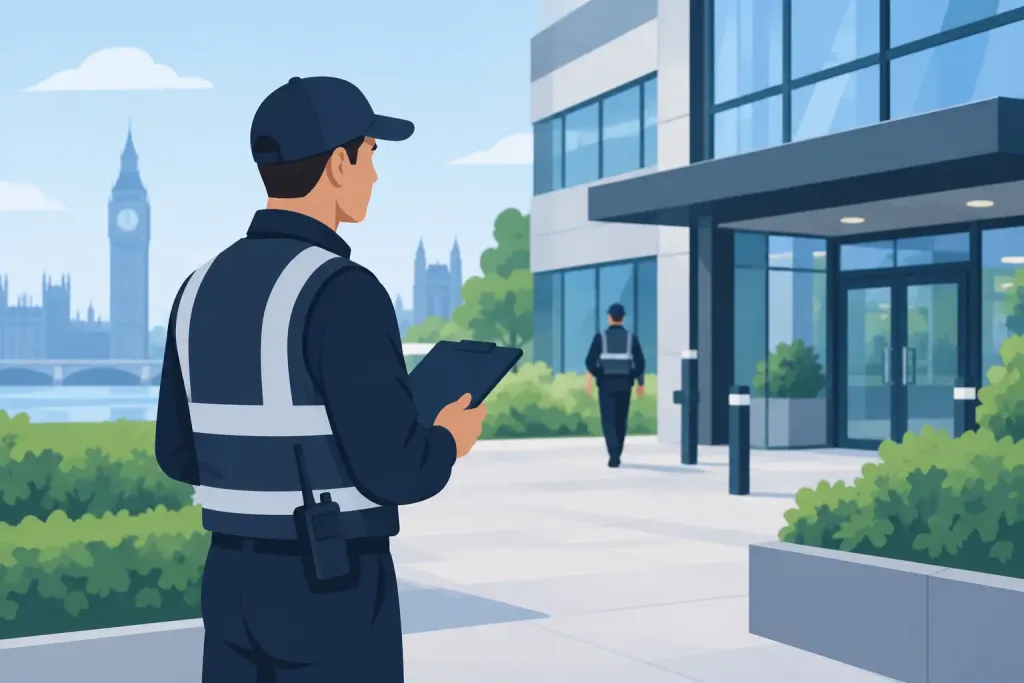
A client disputes a missed patrol at 03:15. The guard says the round was completed; the site manager has no record beyond a handwritten entry made at the end of the shift. That is precisely where an audit trail either protects the security operation or exposes a serious control gap. Understanding what are patrol audit requirements means building records that prove what happened, when it happened, who carried it out and how exceptions were managed.
For UK security providers, facilities teams and in-house departments, patrol audits are not simply an administrative exercise. They are the evidence behind service delivery, health and safety controls, incident response and client confidence. The exact requirement varies by contract, site risk and operating model, but the standard is clear: records must be accurate, traceable, available and capable of standing up to scrutiny.
What are patrol audit requirements in practice?
Patrol audit requirements are the documented controls used to verify that scheduled security activity has been completed properly. An auditor, supervisor or client should be able to follow the record from the planned patrol through to its completion, identify any deviation and see the action taken.
A credible audit process normally brings together patrol schedules, proof-of-presence data, officer identity, timestamps, incident records, supervisory checks and corrective actions. It should show more than that a guard was on site. It should demonstrate that critical locations were visited within the required window, safety or security observations were recorded and missed activity was escalated.
There is no single UK law that prescribes one universal patrol-audit checklist. Requirements depend on the service specification, risk assessment, insurance conditions, client service-level agreement and applicable standards. Where BS 7499 is relevant to a security guarding contract, its principles around assignment instructions, records, supervision and control support a disciplined approach to patrol evidence. Health and safety duties, meanwhile, demand that foreseeable risks are assessed and managed, particularly where lone workers, remote sites or hazardous areas are involved.
The evidence a patrol audit should contain
The strongest audit trail links operational intent with verified field activity. A schedule without a completion record is only a plan. A scan without a linked officer, time and location provides limited assurance. Together, the records create defensible proof of service.
Planned patrol instructions and site-specific duties
Start with the expected standard. The audit record should identify the patrol route, required frequency, timing tolerance and checkpoints or zones to be covered. It should also reference assignment instructions, including locked doors to inspect, plant rooms to check, vulnerable access points, welfare checks or fire-safety observations.
This matters because a patrol can only be assessed against a defined expectation. If a warehouse requires perimeter checks every two hours, but a contractor is merely told to “walk the site regularly”, neither party has a reliable basis for measuring performance.
Instructions should be controlled. When a route changes because of construction works, a new tenant, a known theft risk or a temporary closure, the system should retain a record of who authorised the change and when it became effective.
Verified proof of presence
Proof of presence is central to patrol auditing. A record should establish that the assigned officer attended the required location at the recorded time, rather than completing paperwork retrospectively or scanning a tag away from the patrol route.
QR codes, NFC tags, Bluetooth beacons and GPS-based virtual checkpoints can all be appropriate, but each has trade-offs. A fixed NFC or QR checkpoint gives a clear, precise visit record at a physical point. GPS suits wide estates, vehicle patrols and remote boundaries, though location accuracy can be affected by building layout, signal conditions and device settings. Higher-risk areas may justify more than one verification method.
The record should include the officer’s authenticated identity, checkpoint or geolocation, date and time, and whether the scan met the permitted patrol window. Any manual override needs its own audit history and a reason. If supervisors can amend records without trace, the audit trail loses much of its value.
Exceptions, missed patrols and delayed activity
A useful audit does not hide non-compliance. It makes it visible quickly enough for managers to intervene. Missed checkpoints, late scans, incomplete rounds, offline devices and out-of-route activity should be identified as exceptions, not buried in a monthly report.
Each exception needs an explanation and an outcome. The officer may have been dealing with an emergency, assisting a visitor, responding to an alarm or unable to access an unsafe area. Those can be valid operational reasons, but they still require documentation. The record should show who reviewed the exception, when the review took place and whether a follow-up patrol, client notification or risk-control change was required.
A pattern of late patrols may point to unrealistic route timing, inadequate staffing, poor handover or a training problem. Treating every late scan as individual misconduct can miss the real cause. Patrol audit data should support improvement, not merely fault-finding.
Incident and occurrence records
Patrols are designed to detect conditions that need attention: an unsecured gate, water ingress, damaged fencing, a fire door obstruction, suspicious behaviour or a welfare concern. The patrol record and the incident report should be connected, with consistent timestamps and locations.
A complete occurrence record normally captures what was observed, what immediate action was taken, who was informed, supporting photographs where appropriate and the status of any escalation. Avoid vague wording such as “all okay” when an issue was found and resolved. Clear factual recording is more valuable to a client, investigator or insurer than broad reassurance.
Where images, location data or named individuals are involved, audit processes must also reflect UK GDPR principles. Collect only what is needed for the stated security purpose, control access to records and avoid retaining personal data indefinitely without a justified retention period.
Audit frequency should follow risk, not habit
A low-risk office site with predictable daytime footfall may only need periodic supervisory review and monthly client reporting. A construction project, vacant property, airport-adjacent facility or isolated industrial site may require live exception monitoring, shift-level review and immediate escalation.
The same principle applies to route design. Frequent scans can strengthen assurance, but excessive checkpoint density may encourage officers to rush the route and focus on the device rather than the environment. The aim is meaningful verification at risk-critical points, supported by sensible timing and clear patrol objectives.
Managers should define three review layers. First, real-time monitoring identifies active missed patrols or lone-worker concerns. Second, supervisors review completed shifts for anomalies, incident quality and recurring issues. Third, periodic management or client audits test wider trends: completion rates, repeat defects, response performance, staffing pressures and outstanding corrective actions.
Record retention, access and data integrity
Patrol evidence is only useful if it remains available when a client, investigator or regulator asks for it. Retention periods should be set in the contract and data-protection policy, taking account of the nature of the site, potential claims and the sensitivity of the records. A routine patrol log may not need the same retention period as a serious incident report or evidence connected to an ongoing investigation.
Security teams should be able to retrieve records by date, officer, site, checkpoint, incident reference or client account without relying on a filing cabinet or an individual supervisor’s memory. Role-based access is equally important. Guards may need to submit records, supervisors may review and amend within defined limits, and clients may receive approved reports without gaining access to personal information they do not need.
Cloud-based systems provide a significant advantage here when they synchronise data promptly and maintain a clear history of activity. QR-Patrol, for example, combines smartphone-based checkpoint verification with live reporting, incident documentation and exportable compliance evidence, giving managers one operational record rather than disconnected paper logs and spreadsheets.
Turning audit findings into corrective action
The final requirement is often the one overlooked: evidence of improvement. A patrol audit should not end when a report is generated. Where it identifies failures or emerging risks, the organisation needs a documented response.
That response may involve retraining an officer, repairing a checkpoint, revising a patrol route, adjusting staffing levels, updating assignment instructions or notifying the client of a site defect. Assign an owner and target date, then record closure evidence. An unresolved issue that appears in audit after audit becomes harder to defend.
For contract managers, this creates a stronger client conversation. Instead of reporting that 96 per cent of patrols were completed, they can explain why exceptions occurred, what was done immediately and whether the underlying risk has been reduced.
The practical test is simple: if a serious incident happened tonight, could your team produce a trusted timeline by tomorrow morning? If the answer is uncertain, the patrol audit process needs attention before the next exception becomes a client dispute, safety failure or avoidable loss.
