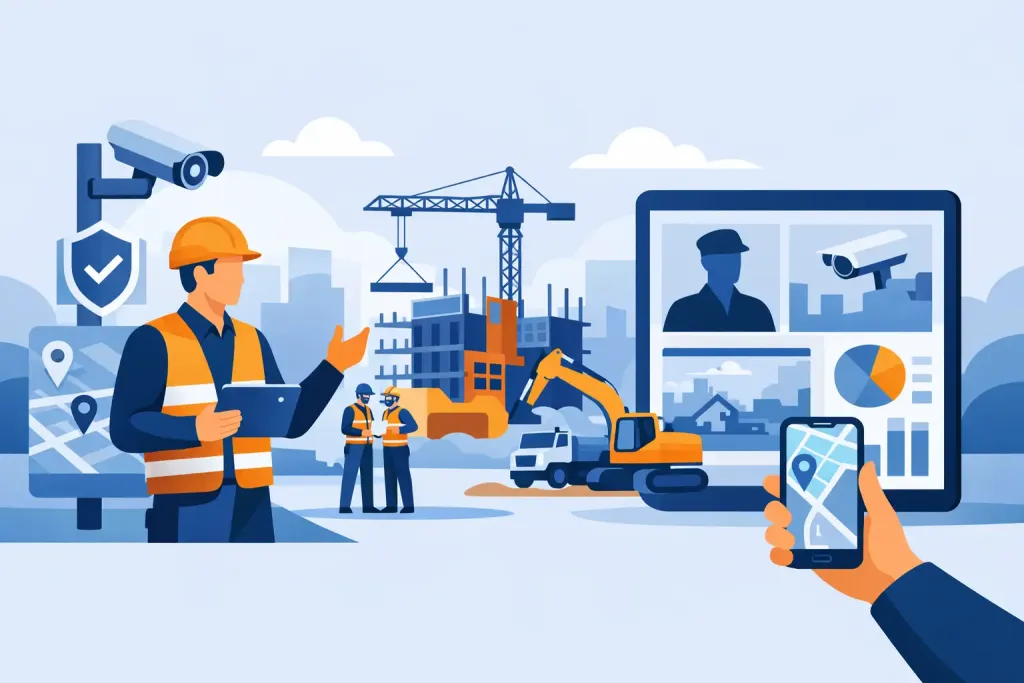
A construction site can change materially between the morning briefing and the evening lock-up. New access routes appear, scaffolding moves, deliveries arrive, plant is relocated and contractors work outside the original programme. Construction site patrol software gives managers live, verifiable evidence that critical areas have been checked when they should be, by the right person, with incidents escalated before they become costly delays.
For security providers, site supervisors and facilities teams, this is not simply a replacement for a paper patrol book. It is a control system for a high-risk, fast-moving environment where missed checks can affect safety, security, insurance exposure and client confidence.
Why construction patrols need more than a sign-off
A handwritten record may show that a guard completed a patrol. It rarely proves where they went, what they inspected, when an issue was found or whether anyone acted on it. On a construction project, those gaps matter. An unsecured fuel store, damaged perimeter fence, open gate, unauthorised person or isolated worker may only be a small observation at first. Left unreported, it can become theft, vandalism, injury or a serious dispute over responsibility.
The difficulty is that construction sites are not static buildings. Checkpoints may need to move as work progresses. A temporary welfare unit becomes a materials compound, a completed floor needs checking while another remains restricted, and the perimeter changes as phases are handed over. A patrol process must be flexible enough to match the site, while still producing a consistent, auditable record.
That is where mobile patrol technology changes the standard of evidence. Guards can scan a QR code or NFC tag, confirm a GPS-based checkpoint or use a beacon at specified locations. Each action creates a time-stamped record visible to authorised managers through a central web application. The result is absolute proof of presence rather than an end-of-shift assertion.
What effective construction site patrol software should control
The strongest systems bring patrol activity, incident reporting and workforce safety into one operational view. The aim is not to burden guards with administration. It is to make the correct action easy in the field and immediately visible to the people responsible for response.
Checkpoint compliance and missed patrols
Patrol routes should reflect actual risk, not just a fixed circuit. Typical checkpoints may include perimeter gates, site entrances, plant compounds, fuel stores, temporary offices, material laydown areas, scaffold access points and welfare facilities. Each can have a defined check frequency based on the time of day, site phase and known threats.
When a checkpoint is scanned, managers receive a live record of attendance. If a required point is missed or a patrol falls outside its expected time window, an automated notification can raise the issue while there is still time to intervene. This is particularly valuable for night guarding, weekend cover and multi-site contracts where a supervisor cannot be physically present at every location.
There is a trade-off to manage. Too many checkpoints can encourage rushed scanning without meaningful observation; too few leave genuine blind spots. The right route is risk-led and reviewed as the project changes.
Fast, evidenced incident reporting
Construction security incidents need clear facts, not vague entries written hours later. A mobile incident form allows the guard to record the location, category, description, photographs and immediate action at the point of discovery. Whether the issue is a forced gate, trespass, fire safety concern, water ingress or damage to plant, the record is time-stamped and retained centrally.
This creates a better response chain. The site manager can be notified immediately, a mobile supervisor can be directed to attend, and the incident report is ready for client review without rekeying handwritten notes. It also helps separate observation from assumption. A defensible report records what was seen, what action was taken and who was informed.
For recurring issues, the data becomes operational intelligence. Repeated perimeter breaches at one point may justify improved lighting, altered fencing or a revised patrol schedule. The software does not replace sound site security design, but it shows where that design is failing in practice.
Lone-worker protection for guards on isolated sites
Many construction patrols take place when the site is empty or partially occupied. A guard may be working alone across a large, poorly lit compound, with uneven ground and changing hazards. Their welfare requires the same level of planned control as the patrol itself.
Lone-worker features such as panic alarms, man-down alerts and welfare checks provide a direct route for help when a guard cannot safely make a call. Managers can see the last known activity and location information available through the system, then trigger the agreed escalation process.
Technology is only one part of this duty of care. Alarm procedures must be tested, contact details kept current and responders clear on what they are expected to do. An alert that reaches an unmonitored inbox is not a safety process. It is an unaddressed risk.
Live visibility improves the client relationship
Construction clients do not only want reassurance that guarding is in place. They need evidence for project meetings, insurer queries, internal reviews and investigations. A clear patrol and incident history gives the security provider a factual basis for demonstrating service delivery against the agreed scope.
This is especially useful where the client manages several live projects. Instead of collecting paper records from each site, operations managers can review activity across the estate, identify exceptions and produce branded reports for each location. They can see whether a problem belongs to one contract, one shift pattern or a wider operational trend.
For in-house teams, the same visibility reduces dependence on informal updates. The facilities or security manager can check live status without waiting for a phone call, while the guard retains a simple field workflow built around scans, tasks and forms.
Compliance records that stand up to scrutiny
Construction sites sit within overlapping health and safety, security, contractual and data protection obligations. Patrol software cannot make an organisation compliant by itself. It can, however, provide reliable evidence that documented procedures were followed, exceptions were identified and corrective action was recorded.
For security companies working to BS 7499 expectations, verifiable patrol records, occurrence logs, assignment instructions and incident documentation support accountable service delivery. For site operators, records can contribute to health and safety investigations and demonstrate that known risks were monitored.
GDPR also needs practical attention. Location and workforce data should be collected for a defined operational purpose, held only for an appropriate period and accessible only to people who need it. Teams should be transparent with staff about what is recorded, why it is used and how it is retained. Good governance protects the organisation as much as the patrol data does.
How to implement a system without disrupting the site
A successful rollout starts with a site survey, not a generic checkpoint map. Walk the perimeter and critical internal areas with the project team. Identify high-value assets, vulnerable access points, hazardous zones, emergency equipment and locations where a lone worker could be difficult to reach. Then build routes around actual priorities.
The practical setup should be kept clear. Name checkpoints so a relief guard can understand them immediately, such as North Gate Vehicle Entrance or Generator Compound. Attach site-specific instructions where necessary, including what to inspect and who to contact if an issue is found. Review the route whenever the construction phase, boundary or site layout changes.
Training should cover more than scanning a tag. Guards need to understand incident categories, photographic standards, alarm use and escalation expectations. Supervisors need to know how to monitor exceptions and close the loop after an alert. If the team continues to rely on phone calls and paper notes because the workflow is unclear, the system will not deliver its intended value.
QR-Patrol supports this approach with smartphone-based checkpoint scanning, live activity monitoring, digital occurrence books, custom forms and lone-worker safeguards in a single cloud platform. This allows security teams to deploy the right controls without returning to fixed, offline guard tour hardware.
Choosing software for a changing project environment
When assessing construction site patrol software, focus on field reliability and management action. A platform should support the checkpoint methods that suit the site, whether QR codes, NFC tags, beacons or GPS-based points. It should also give managers immediate visibility of missed patrols and incidents, rather than storing information until a device is returned at the end of the shift.
Consider how easily forms, routes and notifications can be adapted as work phases move. Ask whether reports make sense to a client who was not present on site, and whether the system can scale from one guarded compound to a portfolio of projects. Finally, test the escalation process. The most useful feature is the one that gets the right person involved quickly when the patrol identifies a real problem.
A well-run construction patrol is not measured by the number of scans completed. It is measured by the risks found early, the people protected and the evidence available when accountability is required.