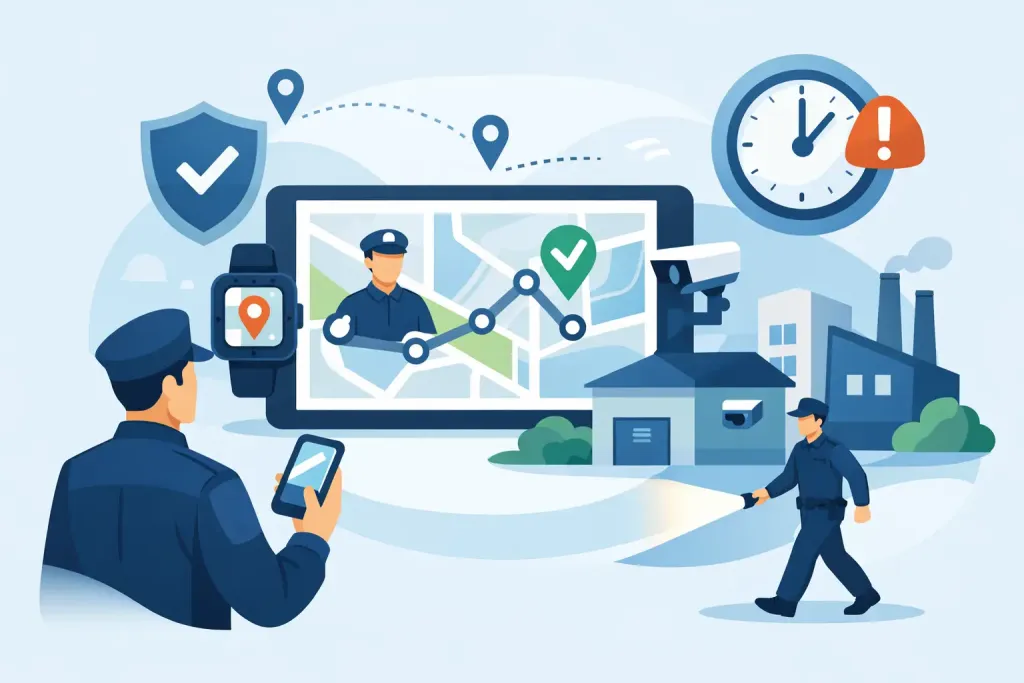
A missed patrol is not simply a gap in a shift record. It can leave an unsecured gate, plant room, fire exit or remote perimeter unchecked at the point when risk is highest. Knowing how to prevent missed patrols means creating a patrol operation that gives guards clear instructions, supervisors live visibility and managers defensible proof that critical checks took place.
Paper occurrence books, radio check-ins and end-of-shift reports cannot provide that level of control on their own. They rely on memory, can be completed after the event and often reveal a problem only when it is too late to intervene. Effective prevention combines a practical patrol design with real-time verification, escalation and accountable follow-up.
Why patrols are missed in the first place
Missed patrols rarely have one cause. A guard may be delayed by an incident, pulled away to cover an access point or given a route that is unrealistic for the time available. On larger estates, shift changes and poor communications can mean a task is assumed to be covered when it is not. At isolated sites, a lone worker may face a welfare issue without being able to report it promptly.
There is also a difference between a genuinely missed patrol and a patrol that cannot be proved. If a guard has walked a route but there is no reliable time, location or checkpoint evidence, the organisation still has an accountability problem. During a client query, insurance investigation or health and safety review, an unverified patrol carries little weight.
The objective is not to punish guards for every exception. It is to distinguish unavoidable disruption from poor performance, then give the control room or supervisor enough time to act. That requires data while the patrol window is still open, not after a report has been signed off.
How to prevent missed patrols with realistic route design
A patrol route should reflect the site as it operates, rather than a theoretical plan created from a map. Walk the route at the times guards will complete it. Consider gate access, lift waiting times, vehicle movements, noise restrictions, poor lighting, weather exposure and periods when particular areas become busy. A route that takes 40 minutes in normal conditions should not be scheduled into a 30-minute window.
Checkpoint placement matters just as much. Tags should confirm attendance at meaningful control points: vulnerable access doors, perimeter gates, high-value asset areas, fire safety equipment locations and plant rooms. Placing several checkpoints close together may create more scans, but it does not necessarily improve security coverage. Each checkpoint should answer a useful operational question: was this risk area physically checked at the required time?
For some sites, a fixed sequence is essential. A guard may need to inspect a particular entrance before opening hours or complete a prescribed fire round. For others, a flexible route within a defined time window is more sensible, particularly where guards must respond to changing risks. The right approach depends on the site, but the expected completion time and evidence requirements must always be unambiguous.
Build in time for real security work
Guards need sufficient time to investigate a suspicious door, challenge an unauthorised person, record a defect or raise an incident. If the schedule allows no margin, staff can feel pressured to rush checks or scan checkpoints without completing the inspection properly.
Set patrol frequencies according to risk, not habit. A busy logistics yard may need more frequent perimeter checks during vehicle movements, while a quiet office floor may require fewer rounds overnight. Review frequencies after incidents, seasonal changes, construction work or changes to client operations. Patrol plans should evolve with the risk profile.
Verify proof of presence at every critical point
The most reliable patrol programmes use location and time-stamped checkpoint verification. Guards can scan QR codes, NFC tags or Bluetooth beacons at physical locations, while GPS-based virtual checkpoints can confirm activity across open perimeters, car parks and larger outdoor estates. Using more than one technology is useful where site conditions vary.
Physical tags offer clear proof at fixed locations, but they need sensible positioning. A QR code placed where it can be photographed or scanned from a vehicle does not provide meaningful assurance. Tags should require the guard to reach the area being inspected, while remaining accessible and safe to use.
A smartphone-based guard app also reduces dependence on a single proprietary reader. Guards can receive current patrol instructions, submit observations and scan checkpoints from one managed device. For supervisors, each verified scan creates a transparent record of where the patrol was completed and when.
This evidence should support the guard, not create needless administration. Keep forms short for routine checks and require more detail only when an issue is found. A guard who identifies damage to a fence should be able to attach photographs, record the location and notify the right person immediately, rather than waiting until the end of the shift.
Use live alerts before a missed patrol becomes a failure
Real-time monitoring is the control that changes a missed patrol from a historic problem into an operational exception. The system should identify when a patrol is approaching its deadline, when a checkpoint has not been scanned and when a route has fallen outside its allowed window. Supervisors can then contact the guard, understand the reason and decide whether another officer needs to attend.
Alert settings need careful configuration. If every minor timing variation generates repeated notifications, supervisors will become desensitised and urgent exceptions may be missed. Prioritise alerts around high-risk checkpoints, late-night patrols, lone-worker activities and client-critical SLAs. Use escalating notifications where appropriate: a reminder to the guard first, followed by a supervisor alert if no action is taken.
The response process must be documented. When a patrol is late, the supervisor should know who contacts the officer, how long to wait, when to deploy relief cover and when to escalate to the duty manager or client. If the officer cannot be reached, treat the situation as both a patrol exception and a potential welfare concern.
Strengthen shift handovers and guard accountability
Many missed patrols occur at the edges of a shift. The outgoing guard may assume the incoming officer will complete the next round, while the incoming officer may not know it is due. Digital schedules and live task status remove this ambiguity by showing assigned patrols, completed rounds, outstanding tasks and active incidents in one place.
A proper handover should identify incomplete patrols, defects requiring reinspection, temporary access restrictions and any changes to the site risk level. This is particularly important when relief officers cover unfamiliar locations. They need a concise briefing, clear route instructions and confirmation of the next critical patrol deadline.
Accountability should be fair and evidence-led. Review recurring late or missed checkpoints with the guard to identify the cause. It may expose a training need, inadequate staffing level, blocked route or flawed schedule. Where the issue is avoidable, clear records provide a factual basis for performance management and client assurance.
Connect patrol monitoring to incident and lone-worker protection
Patrol compliance should not sit separately from the wider safety operation. A delayed patrol may be caused by an incident that needs immediate escalation. A guard who stops moving unexpectedly in a remote area may require welfare intervention rather than a reminder to complete a route.
Combining patrol activity with panic alarms, man-down protection and incident reporting gives supervisors a clearer operational picture. For example, if a guard misses two perimeter checkpoints and triggers a panic alert, the control room can see the last verified location and send support without relying on incomplete radio traffic.
This approach also creates stronger records for health and safety obligations, contractual performance reviews and post-incident investigations. Time-stamped evidence shows not only that a patrol was planned, but how the organisation responded when conditions changed.
Review exceptions to improve the operation
Preventing missed patrols is an ongoing management process. Review compliance reports by site, shift, route and checkpoint to identify patterns. Repeated failures at one location may indicate a tag issue, poor mobile signal, an impractical route or a guard training gap. Repeated late rounds on a particular shift may show that staffing does not match the workload.
Use reports to have specific conversations with clients and operational teams. Instead of saying patrol standards are improving, show completion rates, exception reasons, response times and supporting incident records. This provides absolute proof of presence while helping managers make decisions based on evidence rather than assumption.
QR-Patrol brings patrol verification, live exception alerts, incident records and workforce safety tools into one cloud-based view, so supervisors can act while there is still time to protect the site. The most effective next step is to review one high-risk patrol route this week: test its timing, confirm its checkpoints and agree exactly what happens when a scan does not arrive.