
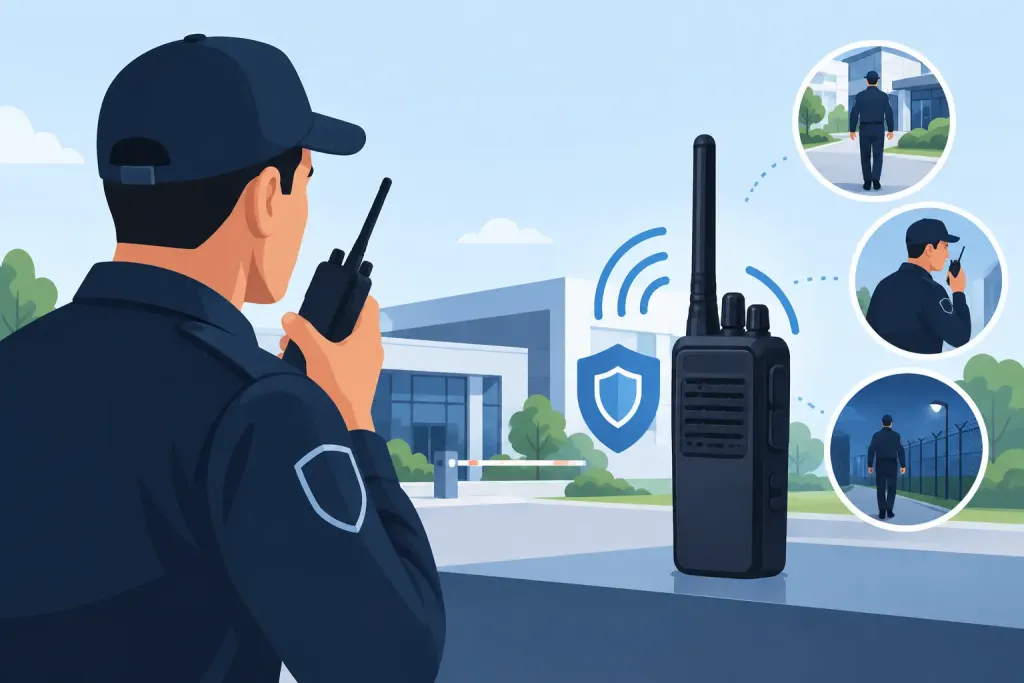
A missed patrol at an isolated plant room or a delayed welfare check is not a minor reporting issue. It is a gap in operational control. A proper patrol scanner review should therefore look beyond whether a device records a scan. The real question is whether it gives managers immediate, defensible evidence that security officers completed the required activity, identified issues and escalated risk without delay.
For UK security companies, facilities teams and in-house security departments, the right system must work under real shift conditions: poor signal, changing routes, lone working, multiple sites and demanding client reporting. A scanner that produces a basic timestamp but leaves supervisors waiting until the end of the shift will not provide the visibility modern operations require.
What a patrol scanner must prove
Traditional guard tour systems were designed to confirm that an officer visited a physical point. That remains valuable, but it is only one part of accountable security delivery. A patrol system should establish who completed the check, where it happened, when it happened and what was found.
This distinction matters when reviewing an incident, managing a client complaint or demonstrating delivery against a service level agreement. A record that simply states a tag was scanned may be insufficient if there is no related observation, photograph, corrective action or escalation trail.
The strongest patrol platforms connect checkpoint activity to the wider security workflow. Officers should be able to receive instructions, report a fault, raise an incident, complete a site-specific form and trigger assistance from the same mobile tool. Managers then receive a time-stamped record while the event is still active, rather than reconstructing the shift from paper notes later.
Patrol scanner review criteria that matter
A patrol scanner should be assessed against the realities of the site, not a feature checklist alone. The following areas determine whether the system will improve control or merely replace one manual record with another.
Live visibility and missed-checkpoint response
A delayed patrol is often more significant than a missed scan. It may indicate an obstruction, an officer welfare concern or a developing incident. Look for a platform that shows patrol progress in real time and can alert supervisors when checkpoints are late, missed or completed out of sequence.
Live monitoring enables intervention during the shift. A control room or operations manager can contact the officer, dispatch support or investigate the issue before it becomes a larger risk. Systems that only upload data when a device is docked or returned to base create an avoidable blind spot.
The useful test is simple: if a guard fails to attend a high-risk checkpoint at 02:00, will the relevant manager know at 02:01, or only when reviewing the next morning’s report?
Checkpoint technology suited to the environment
Not every location needs the same scanning method. QR codes are straightforward to deploy and easy to replace, making them practical for many buildings, estates and temporary locations. NFC tags provide a fast contactless scan and may be preferable where labels could be damaged or where a more discreet checkpoint is required.
Bluetooth beacons and GPS-based virtual checkpoints can extend coverage to larger outdoor areas, vehicle patrols and locations where fixed tags are not appropriate. GPS must be used carefully, however. It is useful for confirming attendance within a defined zone, but accuracy can vary around tall buildings, underground areas and dense urban sites.
A flexible system lets operations teams select the right method for each risk point rather than redesigning the patrol around a single piece of hardware. This is especially valuable for multi-site contracts where an office complex, warehouse yard and construction project all have different operational conditions.
Incident reporting and officer safety
Checkpoint verification is only part of the job. During a patrol, an officer may find an unsecured door, a water leak, unsafe behaviour, damaged fencing or signs of intrusion. The scanner should allow them to record the issue immediately with structured details, photographs and location data where appropriate.
This creates a clearer chain of action. A supervisor can see what happened, when it was reported and whether it was acknowledged or resolved. It also reduces vague end-of-shift entries such as “all checked”, which provide little protection during an audit or post-incident investigation.
For lone workers, safety controls deserve equal weight in any review. Panic alarms, man-down detection, welfare monitoring and automated notifications can provide vital support when an officer cannot make a call. These tools are not a substitute for suitable staffing levels, risk assessments or escalation procedures, but they give managers a faster route to identify and respond to a potential emergency.
Reporting that stands up to scrutiny
Clients do not pay for activity they cannot verify. A patrol scanner should turn field activity into clear records that show completed rounds, exceptions, incidents, response times and officer actions. Reports need to be understandable to site managers as well as security professionals.
For regulated or contract-sensitive environments, assess whether reports can support internal audits, client reviews and evidence requirements linked to BS 7499, health and safety duties and agreed SLAs. The system should retain a transparent audit trail, including timestamps and changes to records, rather than relying on manually edited spreadsheets.
Data protection must also be considered. Location information, officer records and incident details should be managed with clear access controls and retention practices that support GDPR responsibilities. More data is not automatically better. Relevant data, held securely and available to authorised people when needed, is what supports defensible operations.
Deployment, devices and total cost
A dedicated guard tour device may suit harsh environments or teams that cannot use personal phones. It can also simplify device control. However, it introduces charging, replacement and collection requirements, and may limit how quickly the operation can adapt.
Smartphone-first patrol systems can reduce hardware dependency and allow rapid deployment across new sites. They also support richer reporting because the officer already has a camera, connectivity and communications capability in one device. The trade-off is that managers need a clear policy for device management, mobile data, security settings and support.
When comparing cost, look beyond the unit price of a scanner or licence. Include installation, tag replacement, training, support, reporting requirements, onboarding time and the management hours currently spent chasing paper records. A cheaper system can become expensive if supervisors must manually assemble evidence after every shift.
Where a device-led scanner can fall short
A scanner cannot correct a poorly designed patrol route. If checkpoints do not reflect actual risk, officers may complete every scan while critical areas remain inadequately checked. Routes should be based on site risk assessments, incident history, access points, vulnerable assets and the timing of higher-risk activity.
There is also a risk of treating scans as a measure of security quality on their own. A scan confirms attendance at a point, not necessarily the standard of the physical inspection. Clear instructions at each checkpoint, supported by forms or mandatory observations where needed, make patrols more purposeful.
Connectivity should be tested rather than assumed. Remote compounds, basements and large industrial facilities may have weak mobile coverage. A suitable platform should preserve records when offline and synchronise them once a connection returns, while clearly showing managers the status of that data.
Match the system to the operation
A single commercial office may need straightforward scheduled rounds, visitor-related incident reporting and client-ready reports. A logistics hub may require vehicle patrols, gate checks, asset inspections and rapid escalation across a 24-hour operation. A security provider managing multiple contracts needs separate site configurations, role-based access and consistent reporting without losing local flexibility.
This is why a patrol scanner review should involve the people who run the shift, not only procurement or IT. Ask officers how quickly they can complete a scan in gloves or poor weather. Ask supervisors what they need to see when an exception occurs. Ask clients which evidence they expect in their monthly review.
QR-Patrol brings QR codes, NFC, beacons and GPS checkpoints into one cloud-based system, allowing teams to use the method that fits each location while monitoring patrols, incidents and lone-worker activity live.
Test the system on a real shift
A demonstration is useful, but a controlled site trial reveals more. Build a sample route with routine checkpoints and one deliberately high-risk location. Ask an officer to complete a patrol, report a damaged access point, attach a photograph and trigger the agreed escalation process. Then review what a supervisor sees at each stage.
Test a missed checkpoint, an out-of-sequence visit and a temporary loss of signal. Check how quickly alerts arrive, whether the information is clear enough to act on and how the completed event appears in the final report. If the process is confusing under normal conditions, it will be slower when pressure is high.
The best patrol scanner is not the one with the longest specification sheet. It is the one that gives your team reliable proof of presence, faster awareness of exceptions and a clear record when someone asks what happened. Start with your highest-risk patrol route, test the response workflow end to end, and let the evidence guide the decision.
