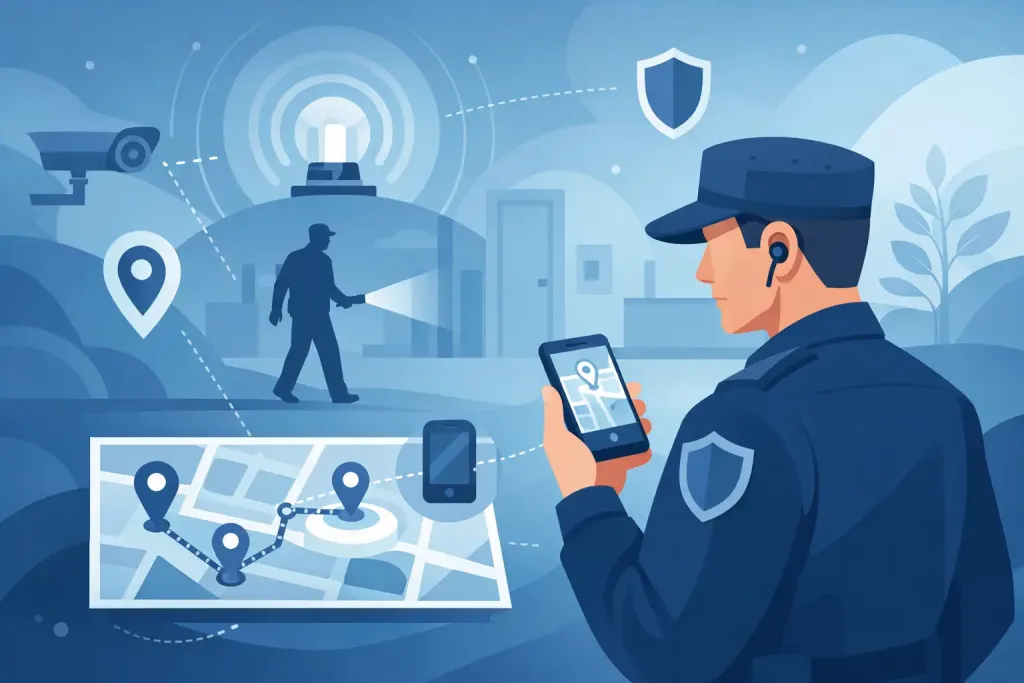
A missed patrol is rarely just a missed patrol. It may leave an access point unchecked, a vulnerable tenant without reassurance, a plant room hazard undiscovered, or a client asking for evidence that does not exist. A beacon guard tracking system gives managers live confirmation that guards have reached required locations, completed assigned duties and raised issues before a routine gap becomes an operational failure.
For security providers and in-house teams, the value is not simply knowing where a guard’s handset is. It is creating an accountable patrol process: defined checkpoints, verified attendance, time-stamped activity and immediate visibility when the plan changes. That distinction matters when managing client SLAs, lone workers, high-risk sites and compliance records.
What is a beacon guard tracking system?
A beacon-based guard tracking system uses small Bluetooth Low Energy devices placed at patrol points. When a guard carrying an authorised smartphone comes within range, the mobile app detects the beacon and records the visit. The record can include the guard identity, checkpoint, date, time, location context and any task or observation completed at that point.
Unlike paper logbooks or verbal handovers, the information is available to supervisors as a structured digital record. A guard may be required to confirm a door is secure, record a reading, photograph damage, complete a form or report an incident before moving on. Managers can then see both the patrol event and the quality of the work carried out during it.
Beacons are particularly useful where a physical checkpoint needs to be discreet, where scanning a visible code is impractical, or where guards need to keep moving without handling tags. They are one option within a wider checkpoint strategy. QR codes, NFC tags and GPS-based virtual checkpoints can all have a place, depending on the site and level of verification required.
Why live patrol proof changes site control
Traditional guard tour systems often create a reporting delay. A supervisor may not know that a checkpoint was missed until the end of a shift, when it is too late to intervene. A cloud-based system changes the workflow: patrol information synchronises as activity happens, allowing control room staff and managers to identify exceptions while they can still be resolved.
This has practical consequences. If a guard has not reached a critical perimeter point within the expected window, a supervisor can contact them, send another officer or investigate whether there is a safety concern. If an incident is recorded, the report can be escalated with photographs, notes and location details rather than waiting for a handwritten occurrence report to be returned.
For contract security companies, live proof also strengthens client conversations. Instead of responding to a query with a reconstructed account of a shift, managers can provide clear records of patrol attendance, incidents, response actions and outstanding issues. The result is a more defensible service record and less room for disputes about whether contracted checks took place.
Where beacon checkpoints work best
Beacon technology is well suited to sites with repeated patrol routes and locations that need regular verification. Warehouses may use beacons at loading bays, fire exits, high-value storage areas and external gates. A facilities team in an office park may position them in plant rooms, reception areas, car parks and emergency access routes.
On construction sites, checkpoint placement must reflect changing site layouts and risks. A beacon can verify patrols at welfare areas, material stores and temporary boundaries, but it should not be used as a substitute for a dynamic risk assessment. When routes change, managers need to update checkpoint plans, tasks and instructions promptly.
In hospitality, residential property and campuses, discretion can be a priority. A small beacon can support routine checks without adding intrusive signage or requiring guards to stop and scan a label in front of residents, guests or visitors. However, the technology should still be paired with clear patrol instructions. Presence at a checkpoint is evidence of attendance, not automatic evidence that every required inspection was completed properly.
Beacon guard tracking system controls that matter
The strongest deployments connect checkpoint verification to the rest of the security operation. A beacon event on its own tells you that a device was detected. A properly configured system turns that event into a controlled, auditable workflow.
Scheduled routes and tolerance windows
Patrol schedules should identify which checkpoints are required, in what sequence where necessary, and within what time window. Not every route needs rigid timing. A concierge patrol may need flexibility to deal with visitors and deliveries, while a vacant-property perimeter check may require strict timed coverage.
Tolerance windows prevent managers being flooded with false exceptions while still highlighting genuine omissions. The right setting depends on risk, staffing levels, site size and the client’s agreed service standard.
Tasks, forms and incident reporting
Attach clear tasks to checkpoints where the inspection needs more than a simple attendance record. A guard checking a boiler room might confirm that access is secure and record an alarm panel status. At a loading bay, they may inspect for obstruction, damage or unauthorised activity.
If a concern is found, the guard should be able to raise an incident from the same mobile workflow. Photographs, written details, custom forms and escalation rules provide a more reliable record than a note added to a logbook hours later. This supports faster intervention and gives managers evidence of how the issue was handled.
Lone-worker protection
A patrol system should support the person carrying it, not only the manager reviewing data. Panic alarms, man-down alerts and welfare monitoring add a vital layer of protection for officers working alone or in isolated areas.
These features must be configured with clear response procedures. An alert that reaches no one, or reaches the wrong person, does not improve safety. Define who receives notifications, what action they must take and how incidents are documented after the event.
Beacons, QR codes, NFC or GPS: choose by risk
There is no universal best checkpoint technology. The right choice depends on the environment, the verification standard and how guards work on site.
Beacons provide hands-free proximity detection and can be discreet. They are useful for routine internal patrols and locations where a fast interaction reduces disruption. Their trade-off is that Bluetooth range and environmental conditions must be tested carefully. Thick walls, metal structures, nearby equipment and poor placement can affect detection behaviour.
QR codes provide an obvious, deliberate scan action and are simple to deploy. They work well where labels can be securely positioned and inspected. NFC tags require close-range contact, giving stronger evidence that the guard reached the precise point, but they may be less convenient when gloves, weather or awkward access are factors.
GPS virtual checkpoints suit large outdoor areas, vehicle patrols and locations where installing hardware is difficult. GPS can be less precise indoors or around tall buildings, so it should not be relied upon for exact room-level proof. Many operations benefit from combining methods rather than forcing every site into one model.
Implementation decisions that prevent weak evidence
A beacon guard tracking system needs a site survey before rollout. Walk patrol routes at the times guards actually work them. Check signal behaviour, identify poor-connectivity areas, assess safe mounting locations and confirm that every checkpoint has a clear operational purpose.
Avoid placing checkpoints merely to create more data. Each one should answer a meaningful question: has the guard checked this critical exit, attended this vulnerable zone, inspected this safety asset or responded to this known risk? Excessive checkpoints can encourage rushed, low-quality patrols and create alert fatigue for supervisors.
Guard training is equally important. Officers need to understand how their mobile device is used, what to do when a beacon does not register, how to report an exception and when to escalate rather than continue a route. Managers should review early patrol data closely, adjusting timing, tasks and routes based on real operating conditions.
Data governance must be addressed from the outset. Tracking should have a defined security purpose, access to records should be controlled, and retention periods should match contractual, legal and organisational requirements. For UK operations, this supports GDPR accountability while ensuring records remain available for incident reviews, client reporting and audits.
Turning patrol data into better decisions
The value of digital patrol records grows when managers review patterns, not only individual events. Repeated missed checkpoints may reveal an unrealistic route, an access problem, inadequate staffing or poor officer performance. Frequent incidents in the same area can justify a revised patrol frequency, improved lighting, additional access control or a client risk review.
QR-Patrol brings beacon checkpoints together with QR, NFC and GPS verification, live monitoring, incident reporting, scheduling and lone-worker safeguards in one cloud-based operational record. This avoids the common problem of holding patrol proof in one system, incident reports in another and client evidence in a third.
The aim is not to monitor guards for its own sake. It is to give good officers clear instructions, give supervisors time to intervene, and give clients reliable evidence that security obligations are being met. Start with the locations where a missed check would have the greatest consequence, then build a patrol process that makes every recorded visit useful.