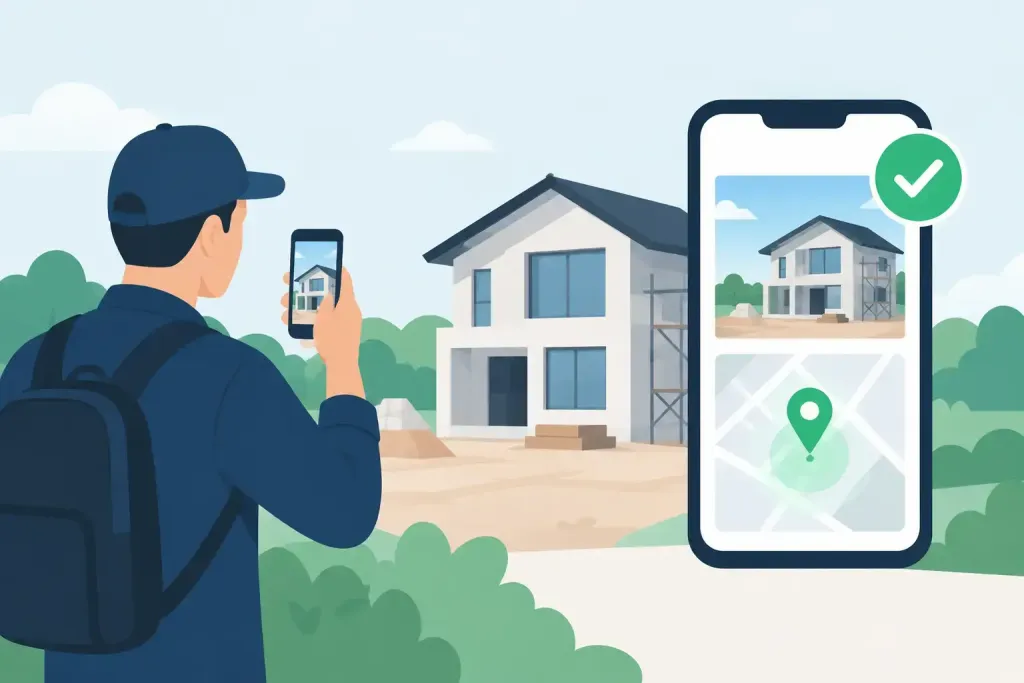
A patrol marked as complete is not the same as a patrol proved. When a client disputes a missed round, an incident occurs after hours, or a lone worker fails to check in, managers need more than a handwritten entry in a logbook. They need to know how to verify site visits with evidence that shows who attended, where they were, when they arrived and what happened while they were there.
For security operations, proof of presence protects more than service standards. It supports incident investigation, contract performance, staff accountability and health and safety duties. The right process gives supervisors live visibility during a shift and gives managers a reliable record long after the shift has ended.
How to verify site visits reliably
Reliable verification comes from combining physical checkpoints, time-stamped activity and clear reporting. Any one of these in isolation can leave gaps. A GPS point may show that a guard was near a site but not that they inspected the fire exit. A paper signature may record a visit but can be completed late, copied or challenged. A fixed checkpoint scan, linked to a named operative and synchronised to a central system, creates a stronger and more defensible record.
Start by defining what a verified visit means for each location. At a small office, it may mean one opening or closing check. At a warehouse, hospital, construction site or remote estate, it may require a sequence of patrol points, welfare checks, asset inspections and incident reporting. The verification method must reflect the risk, the client SLA and the practical reality of the site.
Put checkpoints where proof matters
A checkpoint should represent a meaningful control point, not simply a place that is easy to scan. Position QR codes, NFC tags, beacons or virtual GPS checkpoints at locations where a physical visit demonstrates that a task has been completed. These often include perimeter gates, plant rooms, fire exits, loading bays, vulnerable access points, welfare areas and restricted zones.
Each checkpoint should have a clear purpose. A scan at a gate can confirm perimeter coverage. A scan at a fire door can prompt the operative to check that it is secure and unobstructed. A checkpoint at a lone-worker location can trigger a welfare confirmation. This turns a patrol from a series of movements into an accountable operational process.
Physical tags generally provide stronger evidence for a specific point than location data alone. GPS is valuable for confirming site arrival, travel patterns and attendance at large or open locations, but accuracy can vary indoors, in built-up areas and where signal is weak. Use GPS as supporting context, not as the only proof for critical patrol points.
Capture the visit at the point of work
Verification is strongest when the guard records activity as it happens. A mobile patrol application can attach the operative’s identity, checkpoint, date and time to every scan, then synchronise the record to a central control room or management portal. Supervisors can see whether required visits are taking place within the expected patrol window instead of waiting until the end of the shift.
The record should also capture exceptions. If a door is damaged, a gate is open or an unauthorised person is found on site, the guard should be able to log the occurrence immediately with notes, photographs, forms and a precise time. A missed checkpoint should be visible as a missed checkpoint, rather than silently disappearing into a paper record.
This distinction matters during an investigation. A completed route tells you that checkpoints were scanned. An exception record explains what the operative found, what action was taken and whether escalation was required. Both are necessary to demonstrate effective site coverage.
Build a verification workflow, not just a scan route
A tag-based system will not fix a poorly designed patrol operation. Site visits need a defined workflow so that guards understand what to do, supervisors know what to monitor and clients receive evidence that matches the service they pay for.
First, map the site by risk. Identify assets, vulnerable areas, emergency equipment, access routes and locations where staff or visitors may be exposed to harm. Then assign checkpoints and tasks to those locations. Avoid placing tags so close together that a guard can scan them without carrying out the intended inspection.
Next, set realistic patrol schedules and tolerance windows. A strict time window may be appropriate for a high-risk perimeter check, while a facilities round may allow more flexibility. Excessively rigid schedules can encourage rushed patrols or unhelpful alerts. Overly broad schedules, however, can conceal late or missed visits. The correct setting depends on the threat level, staffing model and client requirements.
Finally, agree an escalation path for exceptions. If a scheduled visit is late, who is notified? If a panic alarm is raised, can the control room see the guard’s last verified location? If a required checkpoint is repeatedly missed, is it a training issue, a route design problem or a potential safeguarding concern? Live alerts are only valuable when someone has ownership of the response.
Make records defensible for clients and audits
A verification record should be easy to understand without relying on the memory of the person who created it. That means clear site names, checkpoint labels, named guards, accurate timestamps and a chronological activity history. Reports should distinguish between completed visits, late visits, missed visits and incidents, rather than presenting all activity as a simple pass or fail result.
For contract managers, this creates a factual basis for client reporting. Rather than stating that patrols were completed, you can show the agreed route, the timing of each visit, any recorded observations and the response to exceptions. This is particularly valuable where clients require evidence against SLAs or where service charges are questioned.
For compliance, digital records can support the evidence needed for BS 7499-aligned operating procedures, health and safety reviews and internal audits. They do not remove the need for proper training, risk assessments or supervision. They do, however, make it far easier to demonstrate that procedures were followed and to identify where they were not.
Data handling also deserves attention. Location and attendance data must be collected for a legitimate operational purpose, retained only for an appropriate period and accessed by authorised people. Make guards aware of what data is collected and why. Clear policies and proportionate use help security teams meet GDPR responsibilities without weakening accountability.
Review missed visits before they become service failures
The greatest value of live verification is not producing a report after an issue. It is seeing patterns early enough to intervene. A supervisor may notice that one checkpoint is regularly late, that a night route takes longer during deliveries, or that a particular site has recurring access-control faults. These trends allow operations teams to adjust staffing, routes, instructions or maintenance before a client raises a complaint.
Review performance at two levels. During the shift, focus on immediate exceptions: missed scans, delayed attendance, welfare failures and active incidents. At weekly or monthly review, look for recurring patterns by site, checkpoint, shift and operative. A single missed scan may be a signal problem. Repeated misses at the same point may indicate an unsafe route, an inaccessible tag or a patrol process that is not working in practice.
QR-Patrol supports this approach by combining mobile checkpoint scanning, GPS-based verification, incident reporting and live cloud visibility in one operational record. Managers can monitor current activity while retaining reportable evidence for clients, investigations and compliance reviews.
Common mistakes when verifying site visits
The most common mistake is treating verification as a box-ticking exercise. If guards can scan every point in seconds without observing the area, the system may prove movement but not effective security. Pair critical checkpoints with clear task instructions, such as checking locks, lighting, obstructions, signs of forced entry or the condition of safety equipment.
Another mistake is relying on a single technology for every environment. QR codes are quick to deploy and easy to replace, while NFC tags can be practical where scanning in poor light is difficult. Beacons can support proximity confirmation, and GPS checkpoints are useful for large outdoor areas or mobile response work. The best choice depends on the environment, risk level, phone connectivity and the standard of proof required.
Do not overlook training either. Guards need to understand why a checkpoint exists, what constitutes an exception and when to escalate. Supervisors need to know how to investigate missing data fairly. Technology should strengthen professional judgement, not replace it.
The strongest site-visit process makes the correct action easy to complete and impossible to overlook. When every meaningful patrol point produces timely, transparent evidence, managers can act with confidence before a missed visit becomes a security incident.