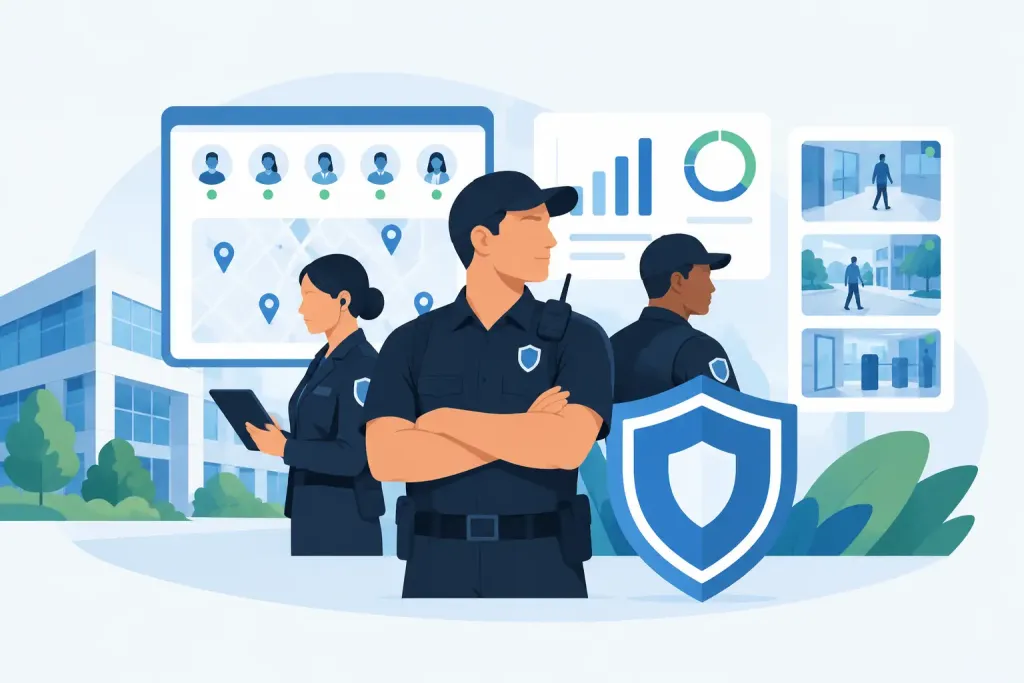
A missed patrol is rarely just a missed patrol. It can mean an unsecured access point, an unreported hazard, a lone worker without support, or a client questioning whether the agreed service was delivered. Security workforce platforms replace assumptions with live, time-stamped evidence of what is happening across every site, shift and patrol route.
Why physical security teams need operational proof
Security managers are expected to account for people, places and actions, often across sites that are geographically dispersed and operationally different. A warehouse may require regular perimeter checks, a construction site may need out-of-hours access control, and a hospitality venue may need immediate escalation when an incident affects guests or staff. Paper occurrence books and standalone guard tour devices make this harder than it needs to be.
When records are completed at the end of a shift, managers cannot act on a missed checkpoint or an escalating incident while it still matters. When patrol evidence is held in separate systems, compiling a client report becomes an administrative exercise rather than a clear account of service delivery. The result is delayed intervention, inconsistent standards and weak evidence when performance is challenged.
A properly deployed platform creates a single operational record. Guards receive their routes, tasks and reporting tools on a mobile device. Supervisors see activity as it occurs. Management can review the evidence by site, guard, shift, incident type or client contract. This is not surveillance for its own sake. It is a practical control measure for maintaining safety, accountability and service quality.
What security workforce platforms should control
The strongest systems connect patrol execution to the wider security operation. Checkpoint scans remain essential, but proof of presence alone does not explain what a guard found, what they did next or whether the issue was resolved.
Verifiable patrol activity
Guards should be able to confirm attendance at physical checkpoints through QR codes, NFC tags, beacons or GPS-based virtual locations. Multi-technology support matters because sites are different. QR codes can be placed quickly and cost-effectively, NFC tags suit fixed internal points, while GPS checkpoints can support perimeter routes, remote land or temporary locations where physical tags are impractical.
Each completed checkpoint should produce a time-stamped record that managers can verify in real time. If a checkpoint is late or missed, the system should notify the right person promptly. That gives a supervisor the opportunity to investigate while the guard is still on duty, rather than finding the gap in a weekly report.
Incident reporting that supports action
A useful incident report needs more than a free-text note. Guards should be able to record the category, location, narrative, photographs and any relevant follow-up action from the field. Custom forms make this process fit the site: a fire door defect, unauthorised access attempt and vehicle damage do not require the same questions.
Live incident alerts help managers decide whether to dispatch support, contact the client, escalate to emergency services or preserve evidence. The speed of that decision can materially reduce risk. Just as importantly, a structured digital record provides a defensible audit trail after the immediate situation has passed.
Lone-worker safety
Many guarding assignments place officers in isolated areas, during unsocial hours or at remote sites. Welfare checks, panic alarms and man-down alerts should sit within the daily workflow rather than being treated as separate safety processes. If an alert is raised, nominated responders need enough information to act quickly, including the guard’s last known location and the nature of the alarm.
Technology does not remove the need for clear escalation procedures, supervisor cover or appropriate risk assessment. It does, however, provide a faster route from a concern in the field to a recorded response by the control team.
Scheduling and task accountability
A patrol can be completed correctly and still fall short of the client’s requirements if routine duties are overlooked. Opening checks, visitor log reviews, key audits, equipment inspections and lock-up procedures all need clear ownership. Mobile task allocation allows managers to assign work to a specific shift or officer, set due times and retain completion evidence.
This makes handovers more reliable. The incoming officer can see outstanding tasks and recent activity rather than relying on incomplete verbal updates. Over time, managers can identify recurring missed duties, resourcing pressures or problem locations and address the cause rather than repeatedly chasing the symptom.
The value of live visibility across multiple sites
For a single-site operation, the benefit is immediate oversight. For a contract security provider or an in-house team managing a large estate, it becomes a way to operate consistently at scale. A central dashboard can show which patrols are active, where exceptions are occurring and which incidents require attention without supervisors having to telephone each location for an update.
That visibility should not lead to a one-size-fits-all service model. A distribution centre, office park and airport-facing facility each have different risks, patrol frequencies and reporting requirements. The platform should allow routes, forms, notifications and permissions to be configured by site while keeping the management view consistent.
It also improves client communication. Rather than sending a generic assurance that checks were carried out, security teams can provide branded reports containing patrol completion, incident details, response actions and exception records. This helps demonstrate delivery against SLAs and gives clients evidence they can use in their own governance processes.
Compliance depends on records people can trust
Physical security operations must be able to evidence that procedures were followed. For UK providers, this can support alignment with BS 7499 expectations around records, assignment instructions, patrols and incident reporting. It can also support health and safety duties by documenting inspections, hazards, welfare activity and escalation actions.
The quality of the data matters. A useful record identifies who completed an action, when and where it was completed, what was observed and what happened next. Time-stamped entries, location evidence and attached media make records more credible than retrospective handwritten notes.
Personal data must still be handled carefully. Location data, staff details and incident reports should be collected for a clear operational purpose, access should be controlled, and retention practices should reflect GDPR obligations and organisational policy. Security workforce platforms can centralise this information, but managers remain responsible for deciding who can view it and how long it is retained.
How to assess a platform before deployment
The right choice depends on operational complexity, not simply the number of guards. A small facilities team may need straightforward checkpoint verification and digital reporting. A regional security company may require client-specific forms, live notifications, lone-worker controls, asset tracking and reporting across dozens of assignments.
When comparing options, assess whether the system can support the following operational requirements:
- Smartphone-based patrols that work with the checkpoint technologies used on your sites.
- Real-time synchronisation and exception alerts, not just end-of-shift data uploads.
- Configurable routes, forms, tasks and notifications for different contracts and risk profiles.
- Clear user permissions, exportable reports and records that are simple to audit.
- Practical onboarding, guard training and support for a phased rollout.
A platform with every available feature is not automatically the best fit. Excessive complexity can undermine adoption, especially where officers are moving from paper records or legacy readers. Start with the controls that address your largest exposure, then build the workflow as teams become confident with the mobile app and reporting process.
Implementation is where accountability becomes routine
Before placing tags or issuing devices, map the assignment instructions against the intended digital workflow. Identify critical patrol points, mandatory checks, escalation routes and the people who need alerts. This prevents a system from becoming a digital version of an inconsistent paper process.
Pilot the process on one representative site where managers can test route timing, connectivity, checkpoint placement and report quality. Ask guards for practical feedback. A checkpoint hidden behind stored materials, a form that takes too long to complete or an alert sent to the wrong role will affect adoption and data quality. Resolve these issues before extending the deployment.
QR-Patrol brings patrol verification, incident reporting, lone-worker protection, task management and live oversight into one cloud-based control system. The operational goal is straightforward: give guards a clear process in the field and give managers immediate evidence to act on.
The most valuable outcome is not a fuller dashboard or a larger archive of reports. It is the ability to spot an exception early, support the person on site and prove exactly how the operation responded when it mattered.